Agora Intelligence
Agora Intelligence is an AI-powered command center within MRI Software designed to help enterprise decision-makers monitor portfolio performance, surface critical insights and make more informed decisions.
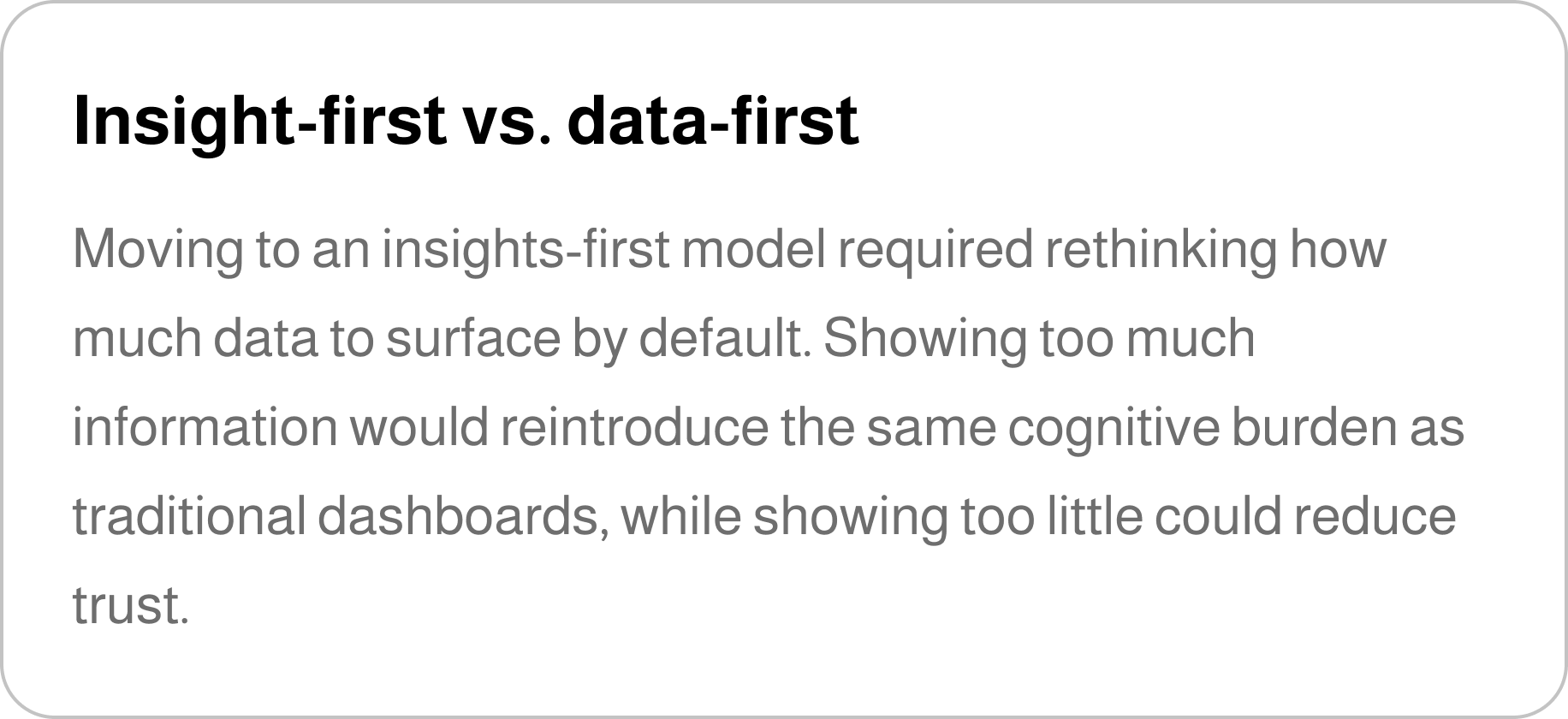
The experience rethinks traditional dashboards by shifting the approach from data-first to insights-first, where AI-driven insights highlight what matters most, and underlying data is surfaced contextually to support recommended action.
As the lead product designer, I owned the end-to-end design, driving both the product experience and key interaction patterns across the command center, insights and AI integrations. I also helped define the shift to an insights-first model and partnered closely with engineering to ensure scalable implementation.
Rethinking enterprise dashboards
Enterprise dashboards surface large volumes of data but rely on users to interpret what matters. Important signals are often buried within charts, requiring manual analysis before action can be taken.
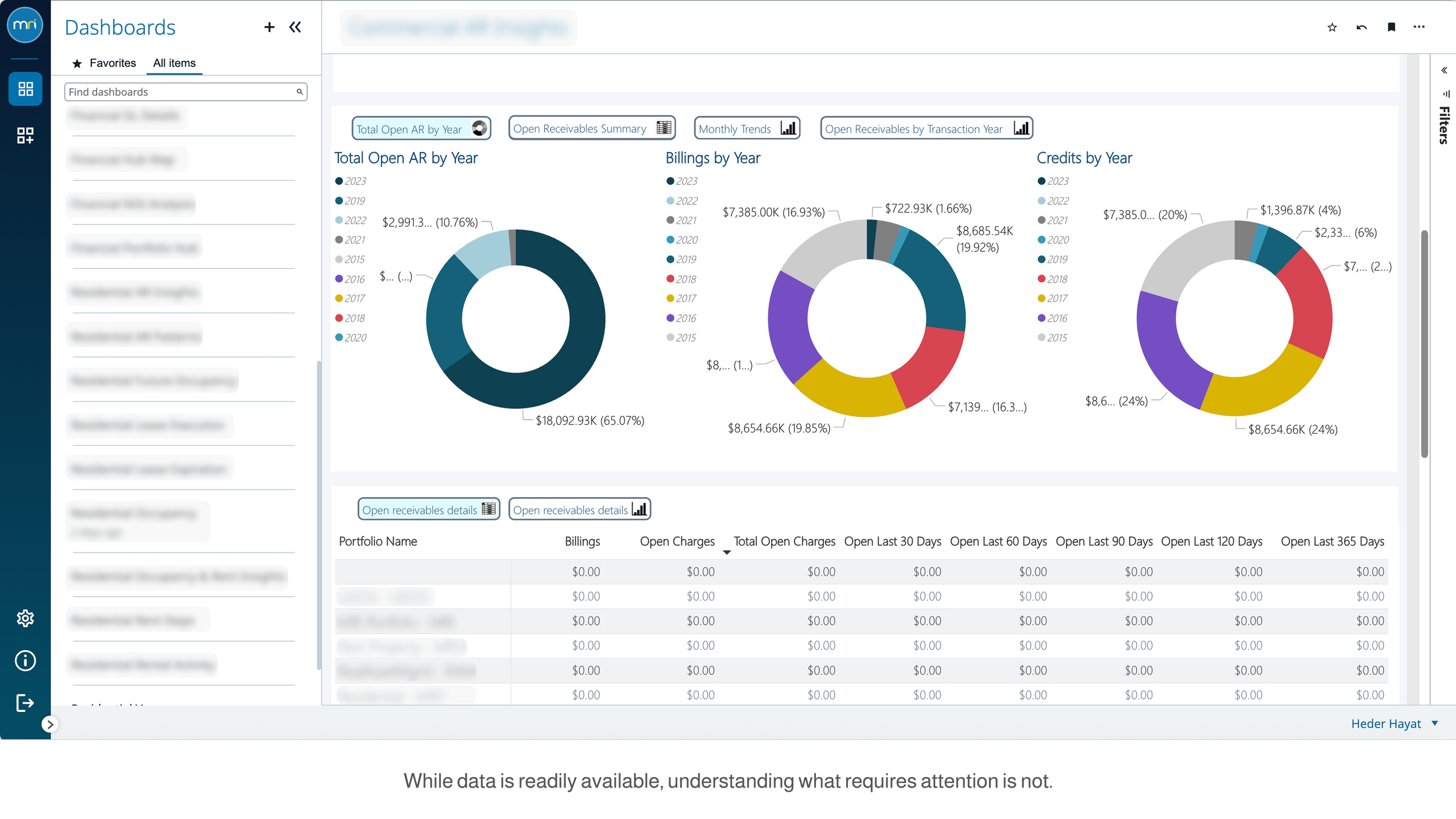
From data to insights
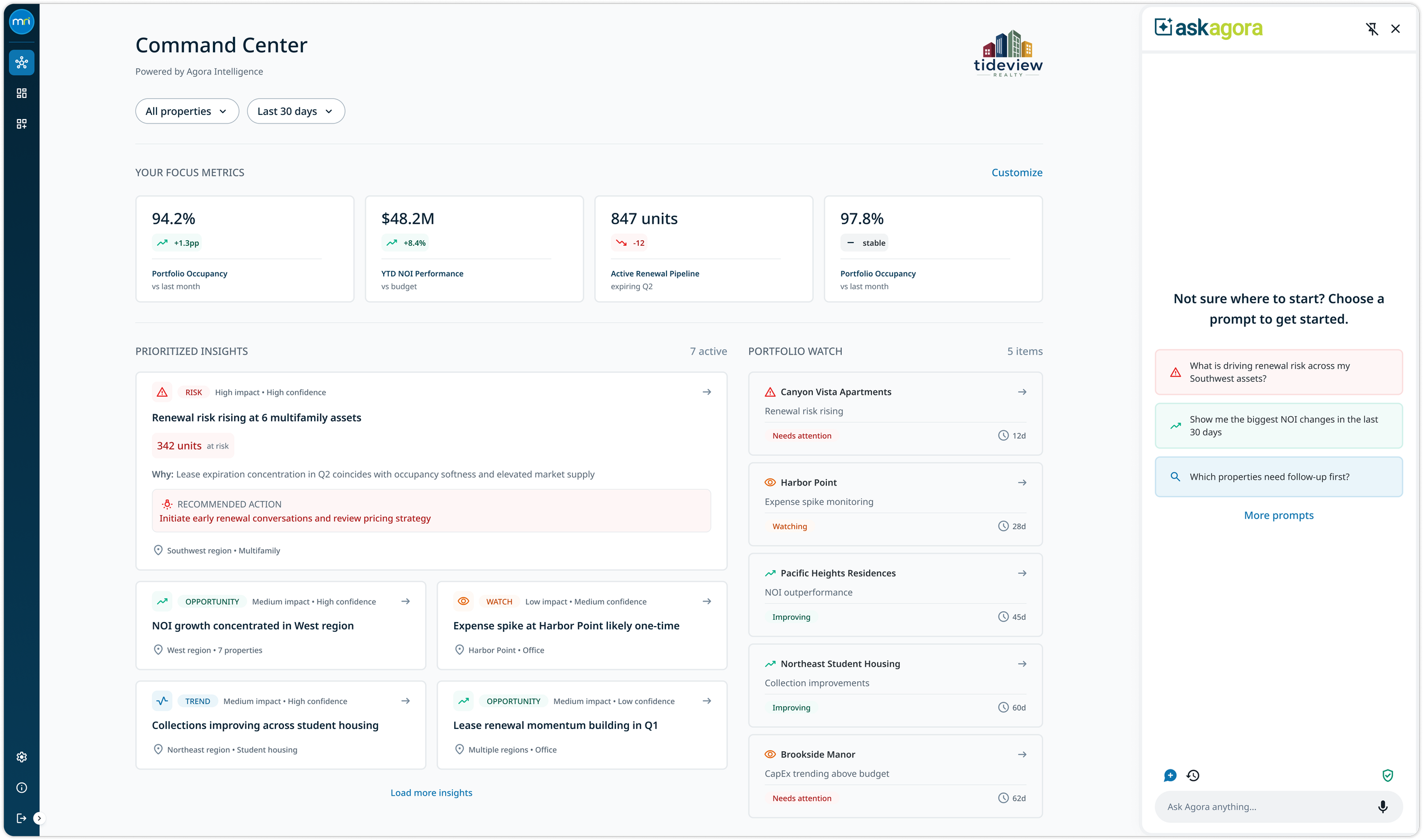
Rather than asking users to interpret dashboards, we redefined the experience to surface prioritized insights, highlighting what changed, what matters, and where attention is needed.
This was not a removal of data, but a reframing of it. Underlying charts, metrics, and visualizations remain part of the experience, but are embedded within insights rather than presented as the primary interface.
To support this shift, we designed a command center that balances system intelligence with user control to structure the experience around how users monitor and act on their portfolio.
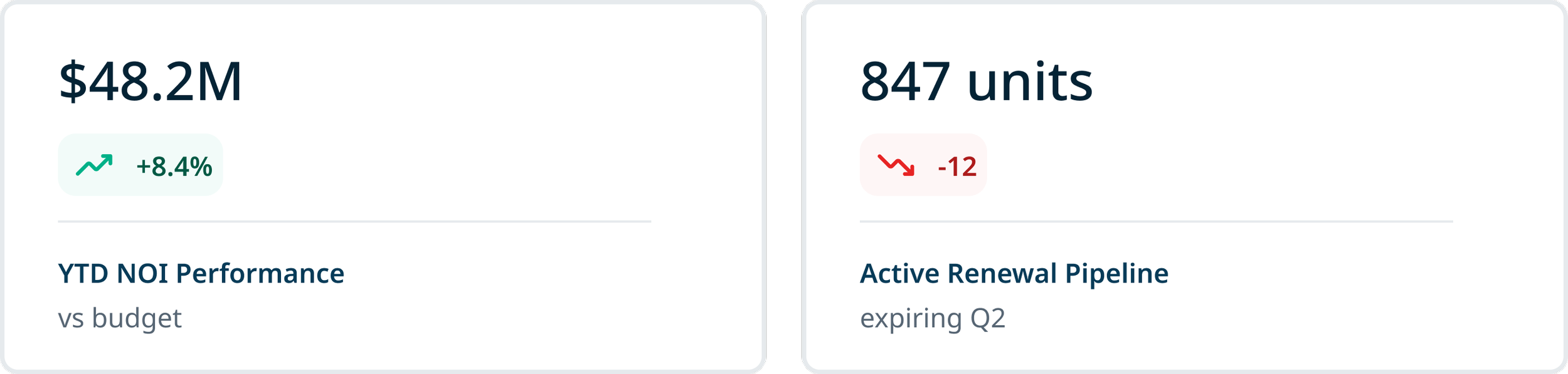
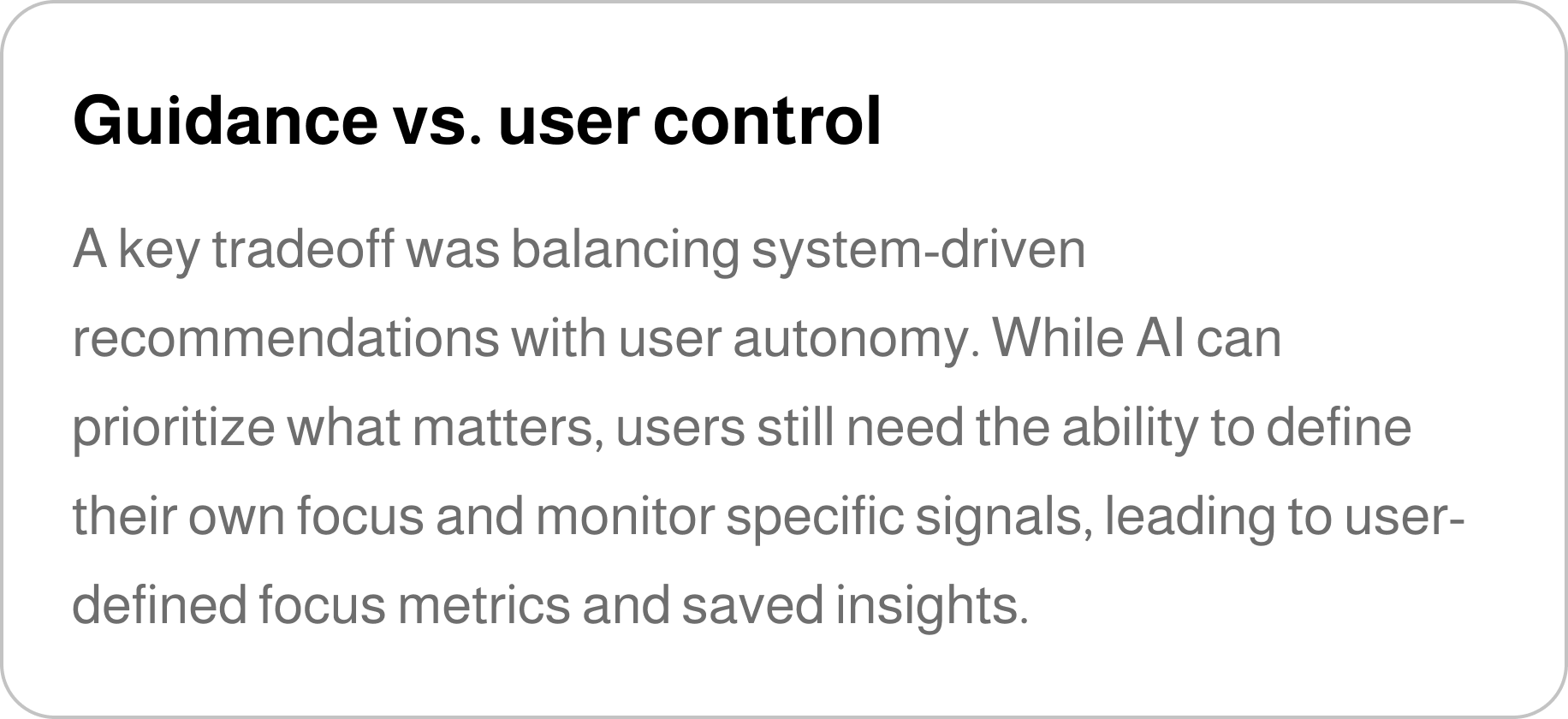
Focus metrics: Users can pin key KPIs they want to monitor at a glance, independent of AI-driven insights. This ensures that while the system surfaces what it deems important, users retain control over the signals they personally care about.
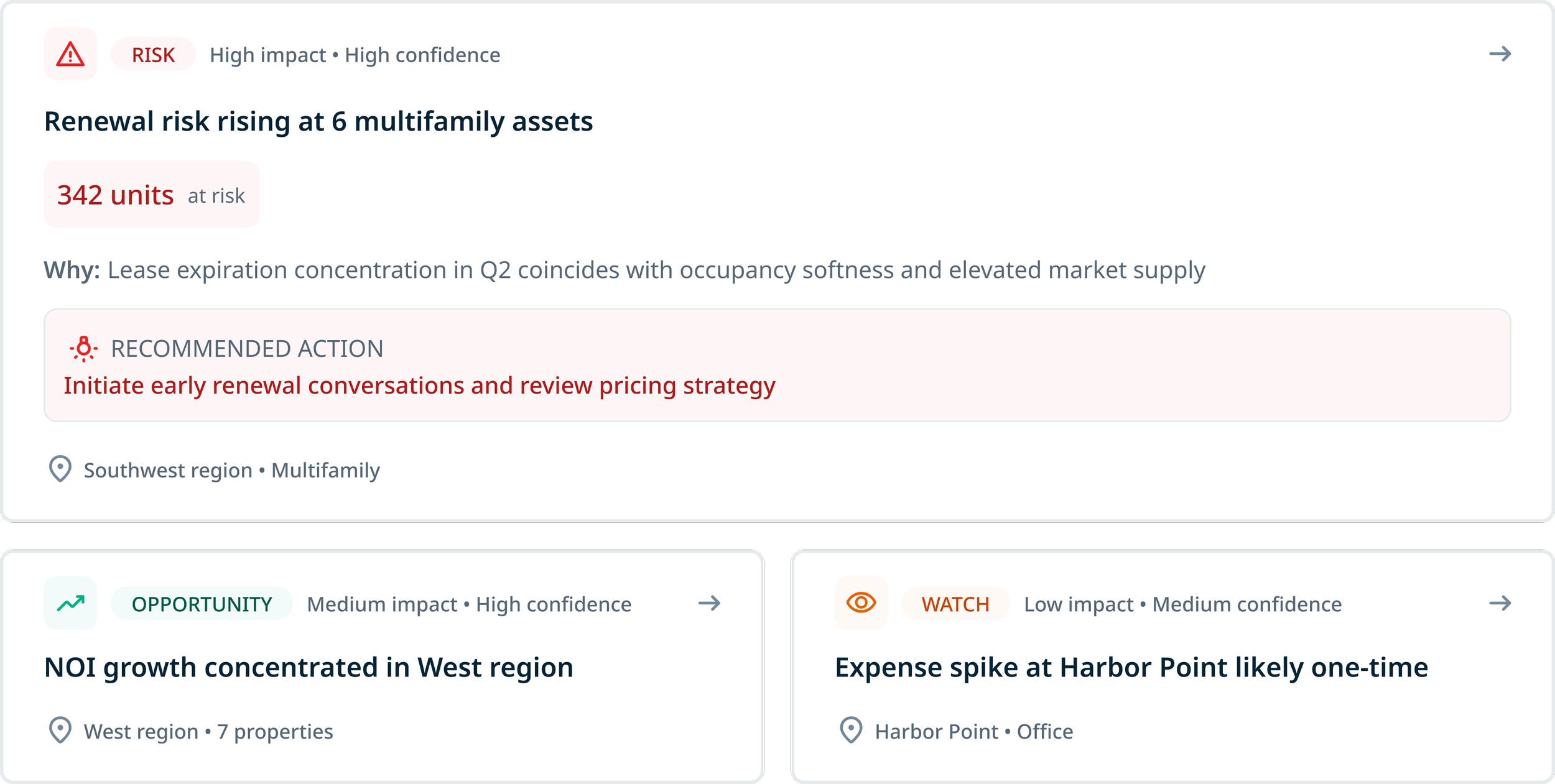
Prioritized insights: The system continuously analyzes portfolio data to surface prioritized insights based on importance. A primary insight is expanded to provide deeper context, while additional insights are presented as a scannable list, allowing users to quickly understand what has changed and where attention is needed.
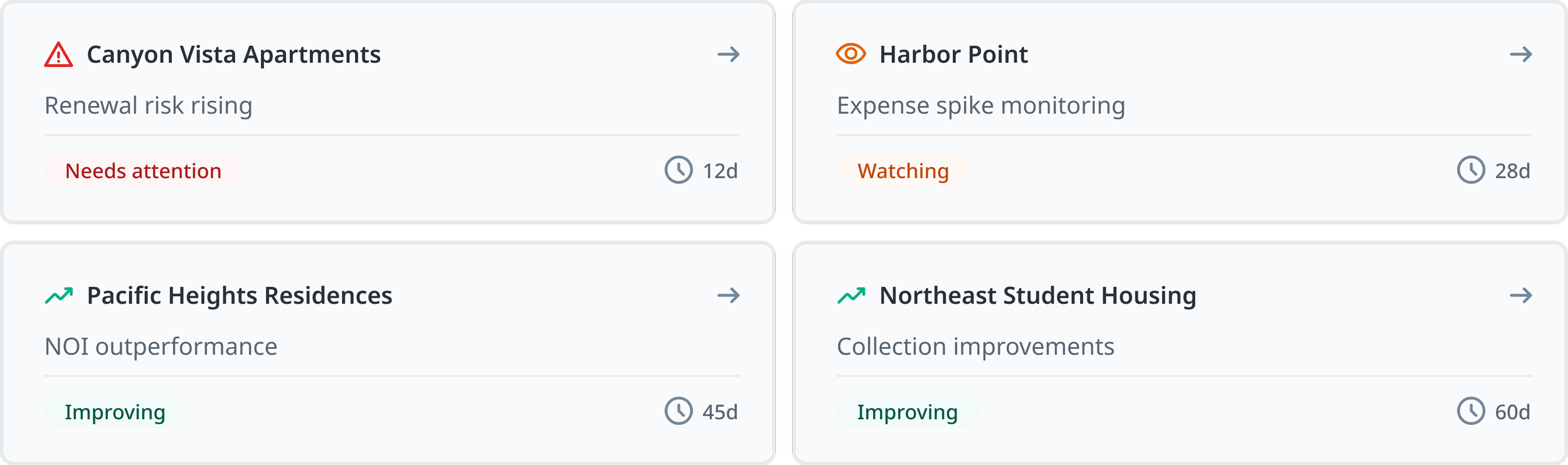
Portfolio watch: Users can save insights to a personal watchlist to track how situations evolve over time. Unlike the dynamic prioritized list, this creates a persistent layer of monitoring, showing what has changed since the insight was first identified and how it should be acted on now.
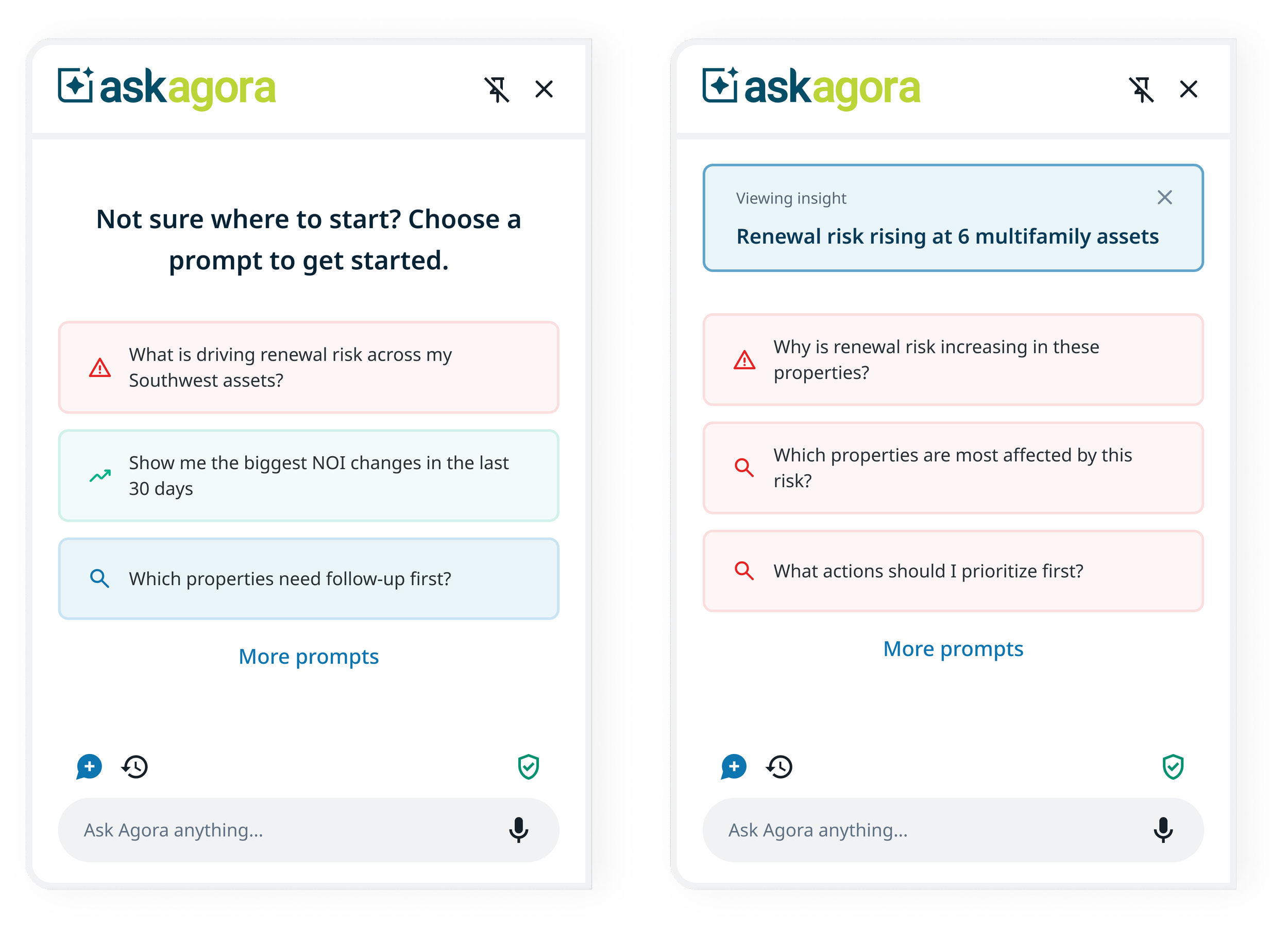
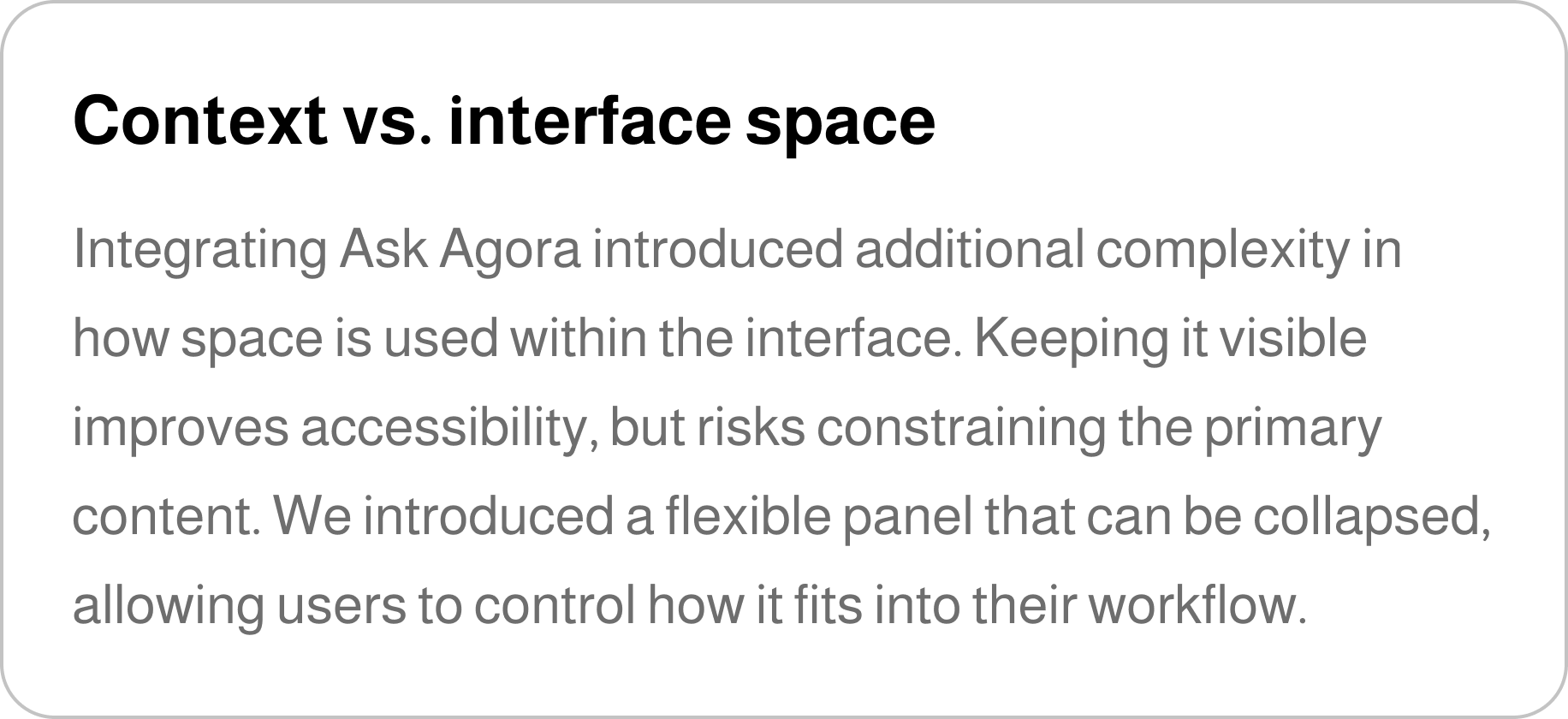
Ask Agora: A persistent, conversational layer that stays aware of the user’s context across the experience. Users can use it to dig deeper into insights, clarify trends, or explore scenarios beyond what is surfaced by default.
By embedding the assistant directly within the workflow, Ask Agora becomes a natural extension of the system, supporting data exploration in real time rather than acting as a separate destination. This reinforces the shift from passive analysis to active exploration.
Diving into insights
Designing actionable insights: Instead of presenting raw data, insights are structured to guide users from signal to understanding to action. Each insight is designed as a self-contained narrative: combining context, explanation, and recommended next steps within a single view.
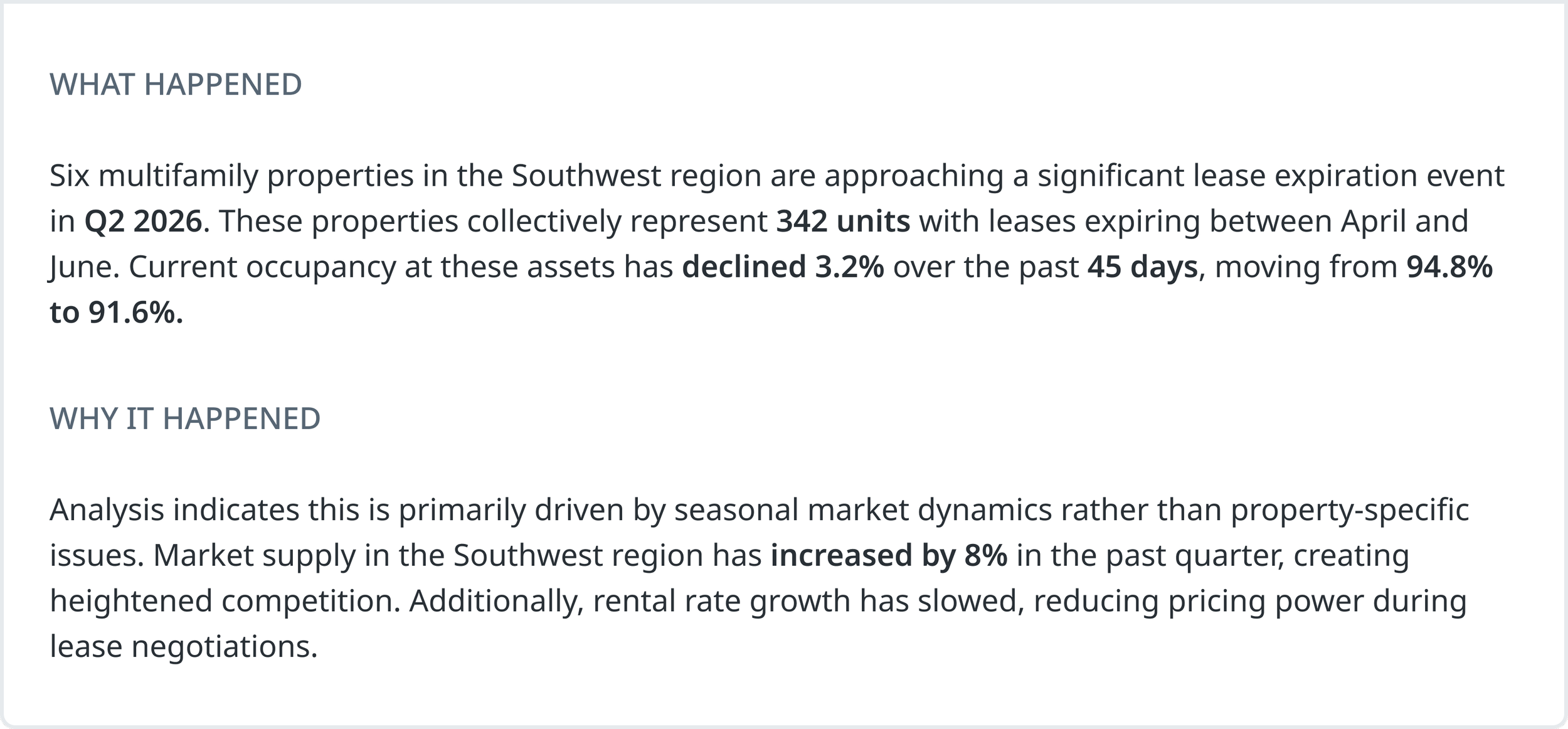
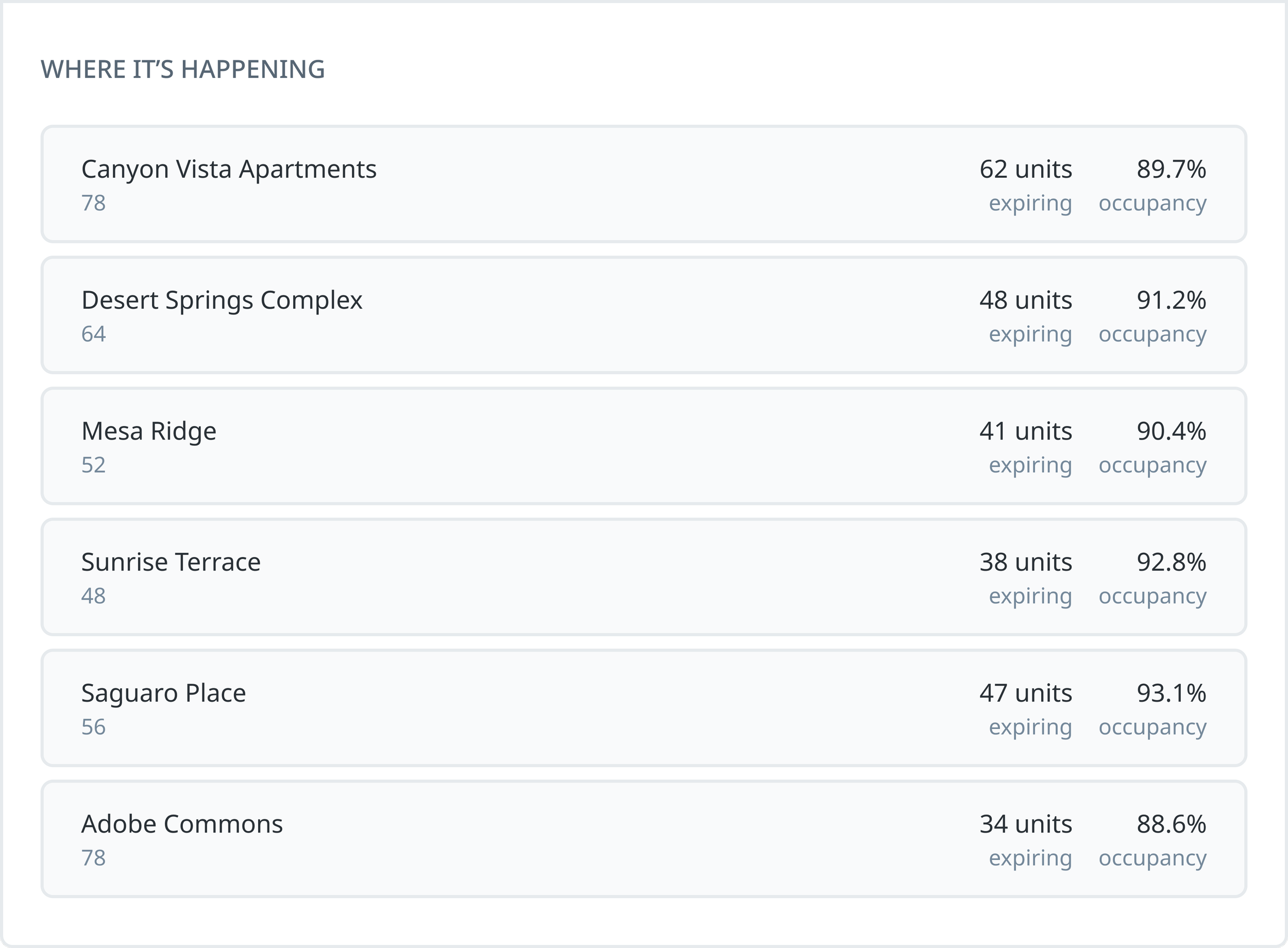
From signal to understanding: Every insight begins with a clear summary of what has changed, followed by a breakdown of why it is happening and where it is occurring. This structure reduces the need for manual analysis, allowing users to quickly understand both the event and its underlying drivers.
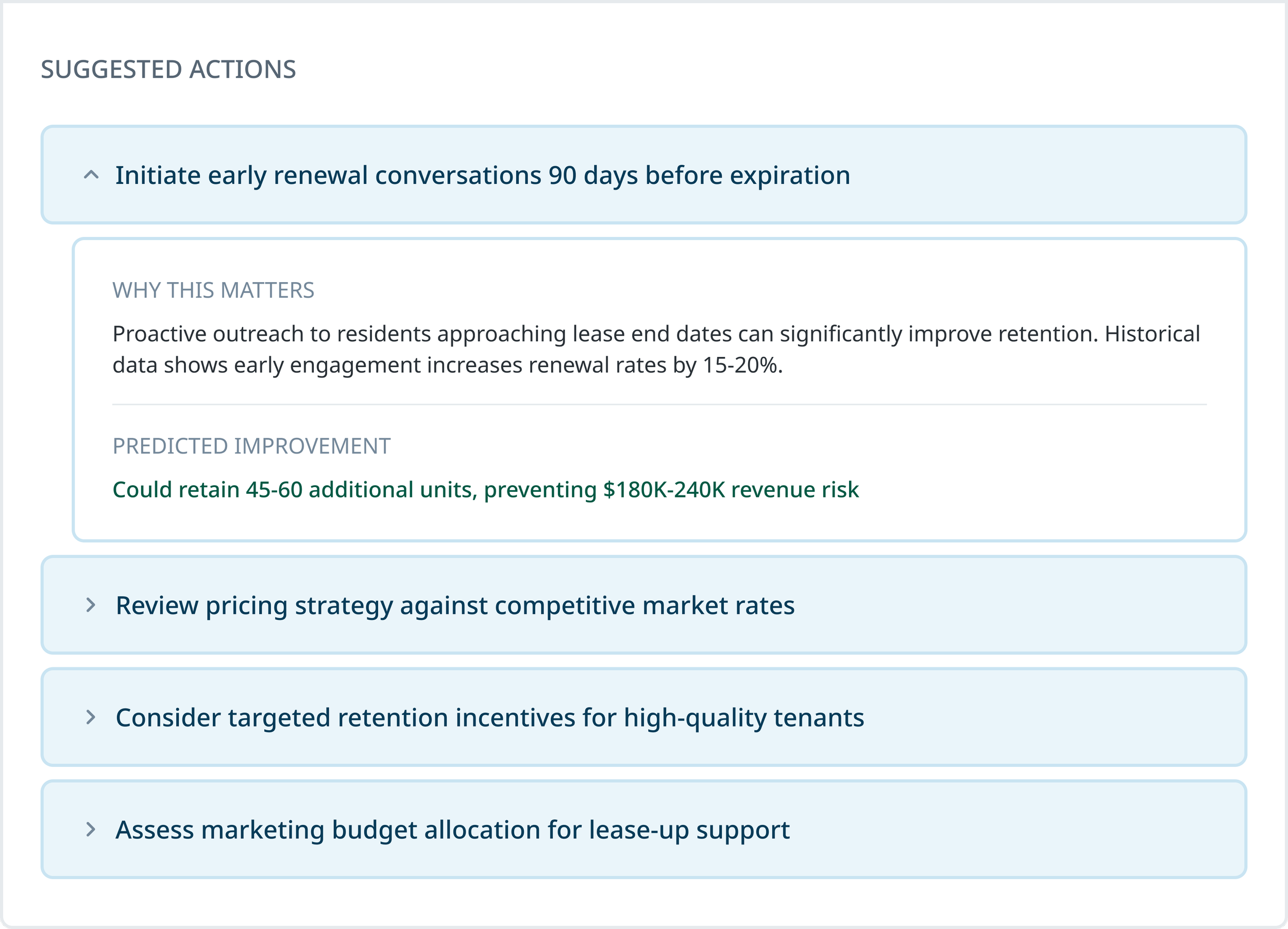
Making insights actionable: Beyond explanation, insights are paired with suggested actions tailored to the situation. These actions are supported with rationale and projected impact, helping users move from awareness to decisions with confidence.
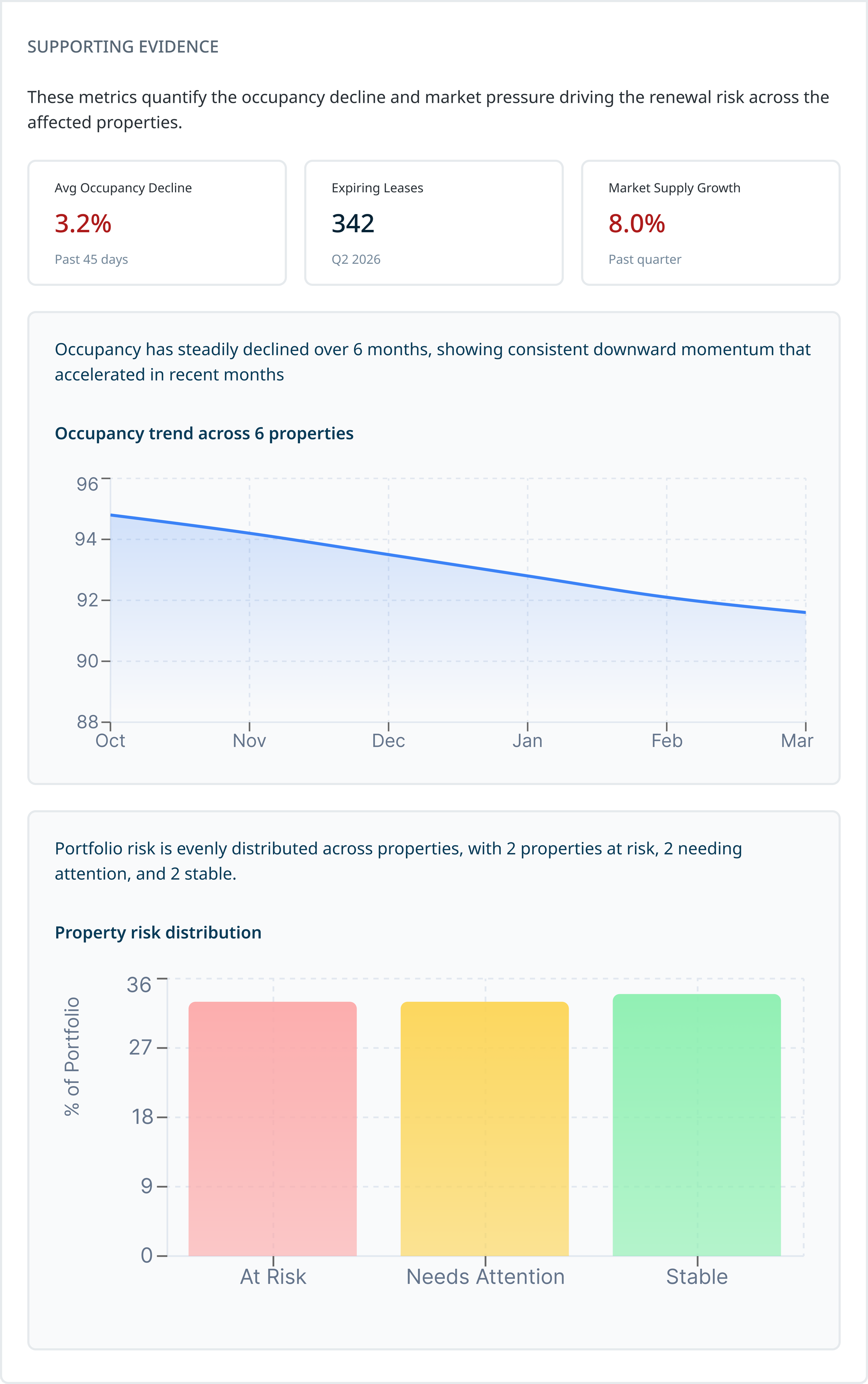
Grounding insights in data: Supporting evidence is surfaced through metrics and data visualizations, providing transparency into how the insight was generated.
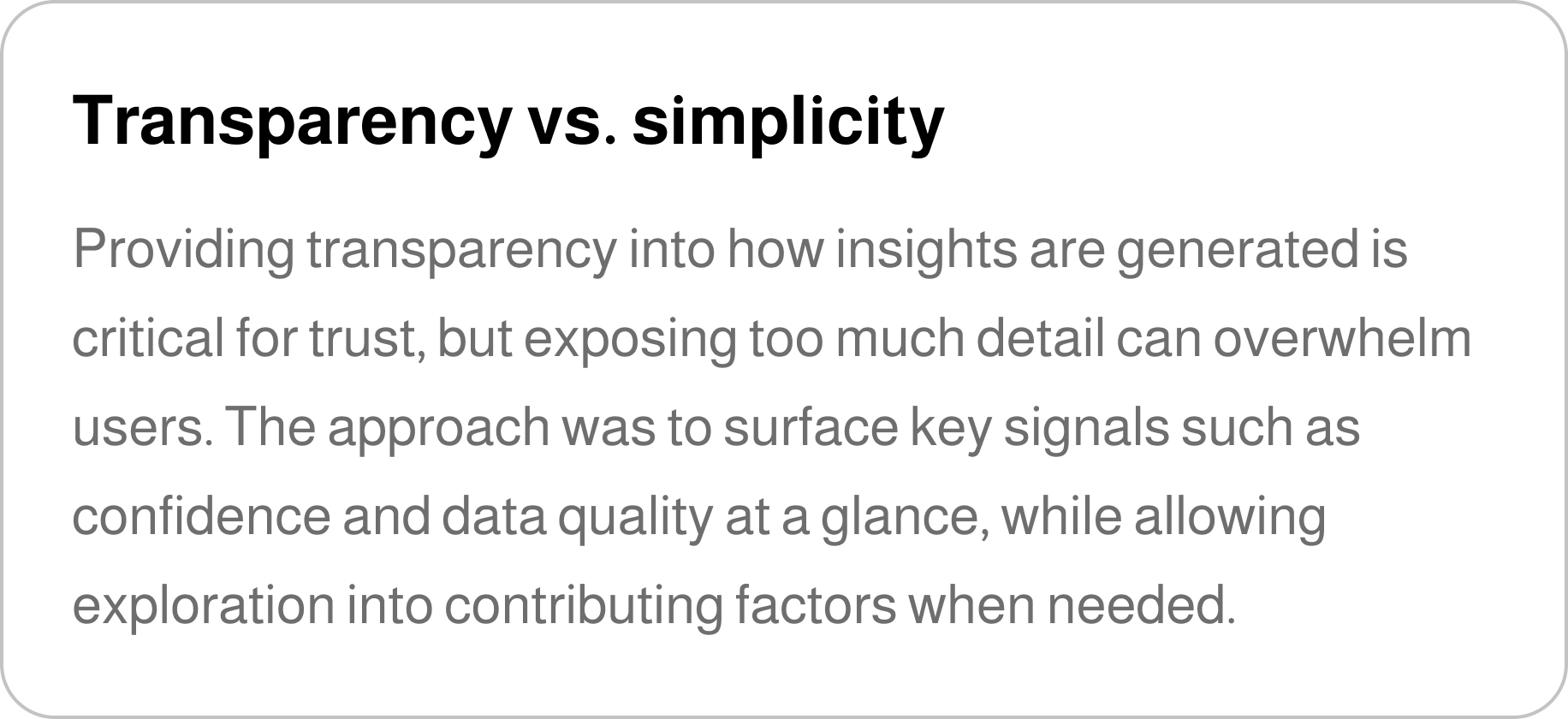
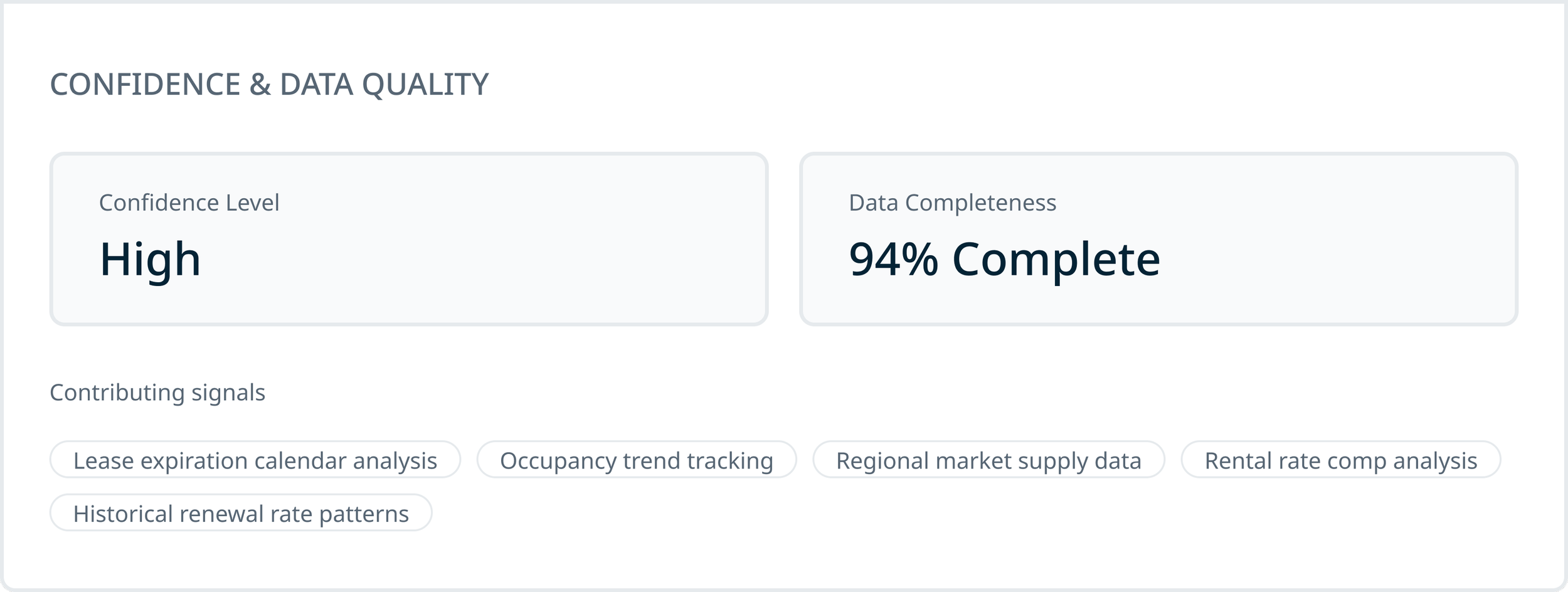
Building trust into the system: Each insight includes signals around confidence and data quality, along with the underlying factors contributing to the analysis. This ensures that users can evaluate not just what the system is recommending, but how reliable those recommendations are.
Challenges and trade-offs
Designing an AI-focused insights model introduced a new set of challenges, requiring careful balance between simplifying the experience and preserving the depth needed for informed decisions.