
Drift
Drift is an end-to-end digital car buying platform that enables dealerships and OEMs to offer a customizable, web-based purchasing experience. It gives consumers full control over vehicle configuration and deal terms, while providing dealers with a unified system to manage pricing, inventory, and third-party integrations in real time.
I worked as the lead product designer on Drift, owning the design process from primary and secondary research to interaction design, prototyping, and usability testing across the entire experience.
Where car-buying breaks down
Buying a car online is still far more complex than it should be. While consumers expect transparency and control throughout the purchase journey, most digital car-buying experiences are fragmented across disconnected tools, unclear pricing structures, and manual dealer processes.
Industry research and interviews with dealers and buyers revealed that a significant portion of online car buyers abandon digital journeys due to fragmented tools and poor follow-up.
User problem: Buyers struggle to confidently complete purchases online due to unclear pricing, trade-in uncertainty, excessive back-and-forth, and a lack of visibility into deal terms. This often forces users to abandon digital journeys and fall back to in-person or assisted workflows.
Business problem: For dealerships and OEMs, this fragmentation results in high lead leakage, increased reliance on customer support, and operational inefficiencies caused by duplicate data entry and poorly integrated systems. Existing tools fail to support a true end-to-end digital buying experience, limiting both conversion and scalability.
What we learned from buyers and dealers
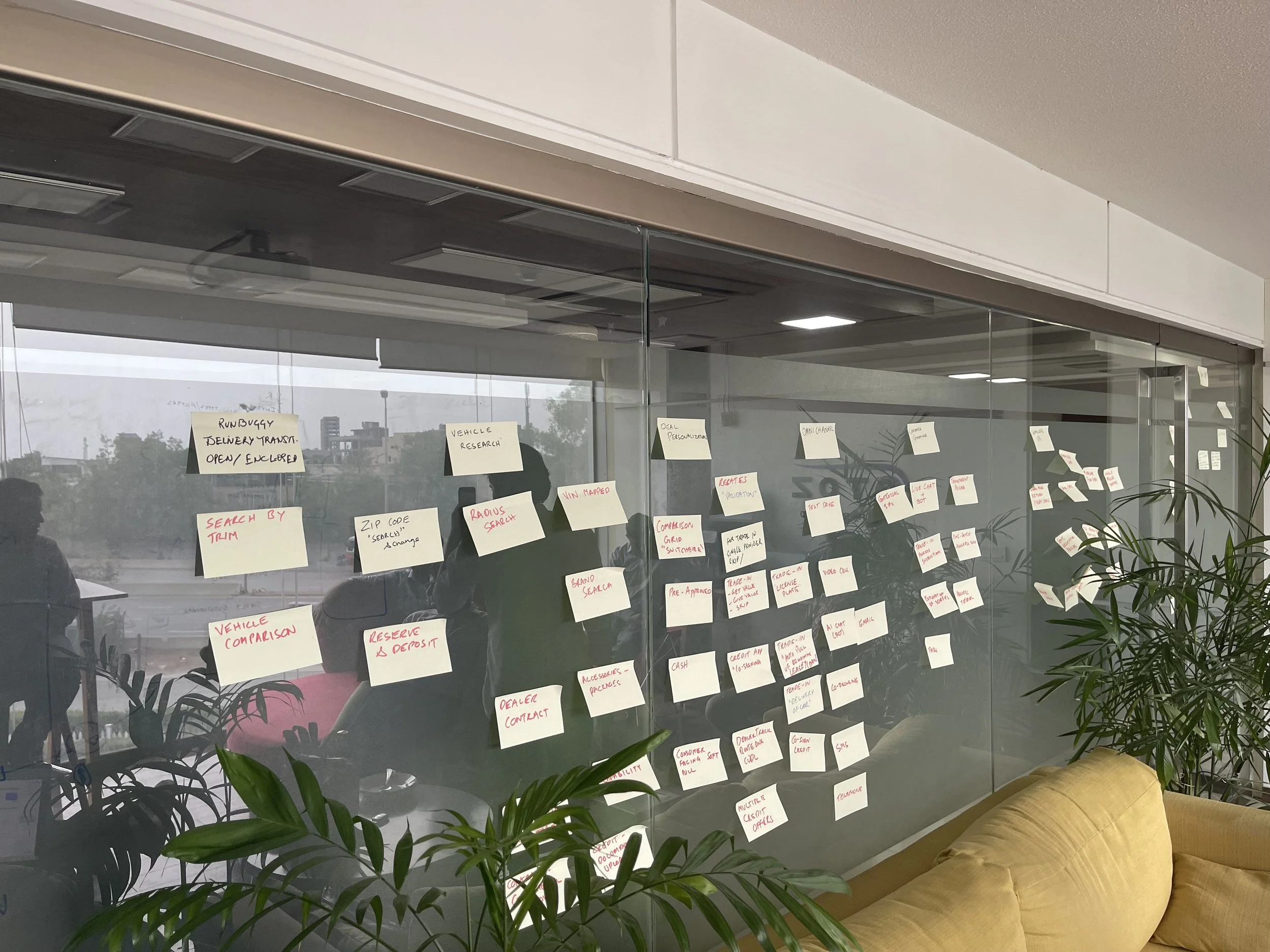
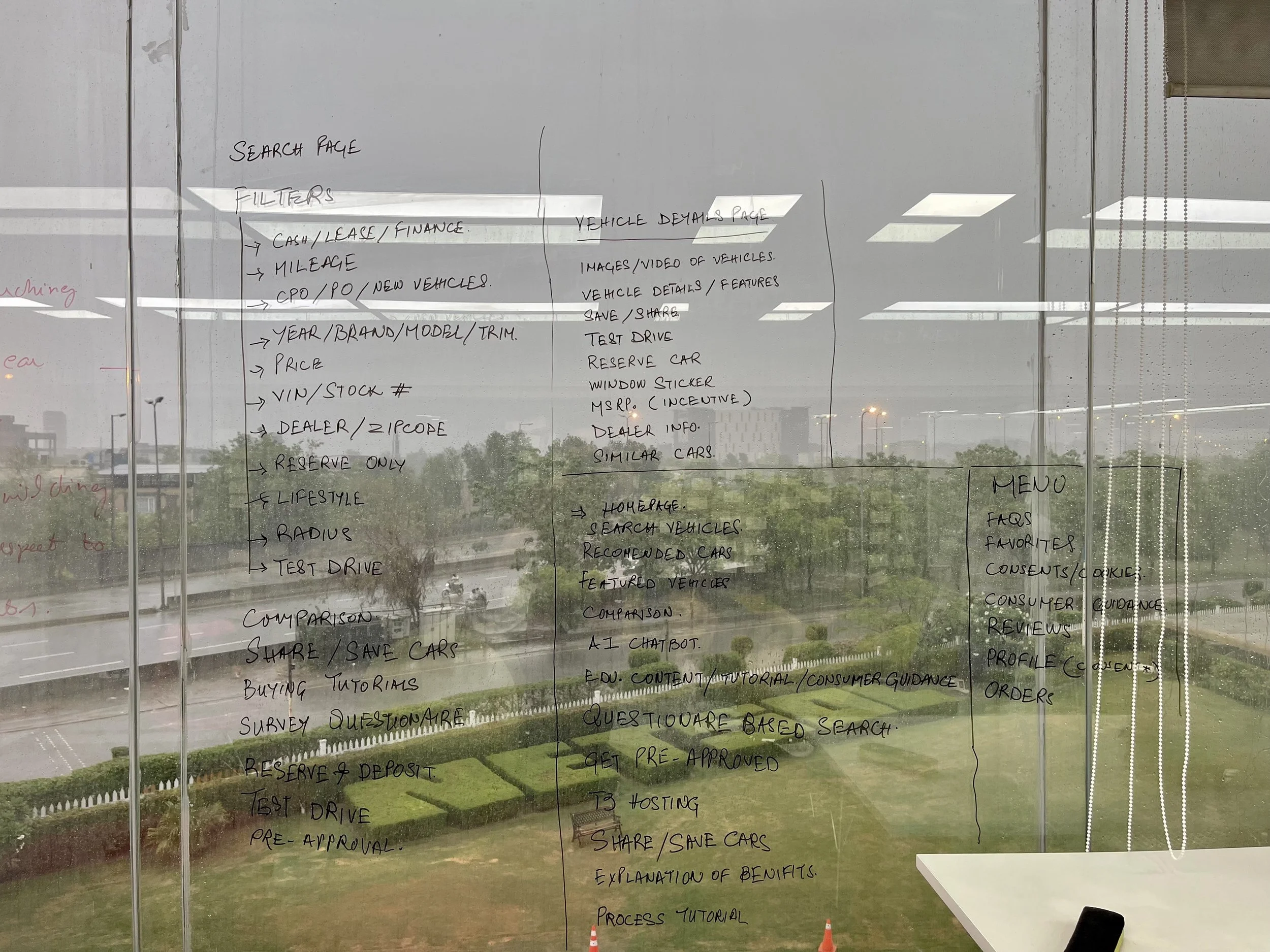
We reviewed dozens of digital car-buying tools and used J.D. Power guidelines of best practices to evaluate where existing experiences break down. We also interviewed three groups in the U.S. to understand pain points across the full journey: first-time buyers, experienced car owners and dealership stakeholders.
Across interviews, a consistent theme emerged: most platforms fail not because they lack features, but because they create uncertainty and friction at crucial moments, such as pricing, financing, trade-ins, scheduling, and paperwork. Buyers want to feel in control and confident throughout the process, and they abandon journeys when the experience becomes opaque, repetitive, or disruptive.
Transparency builds trust
Users want pricing changes reflected immediately with a clear breakdown.
Continuity matters
Breaking the flow increases drop-off, fast onboarding keeps momentum.
Clarity reduces anxiety
Users want pricing changes reflected immediately with a clear breakdown.
Designing from scratch
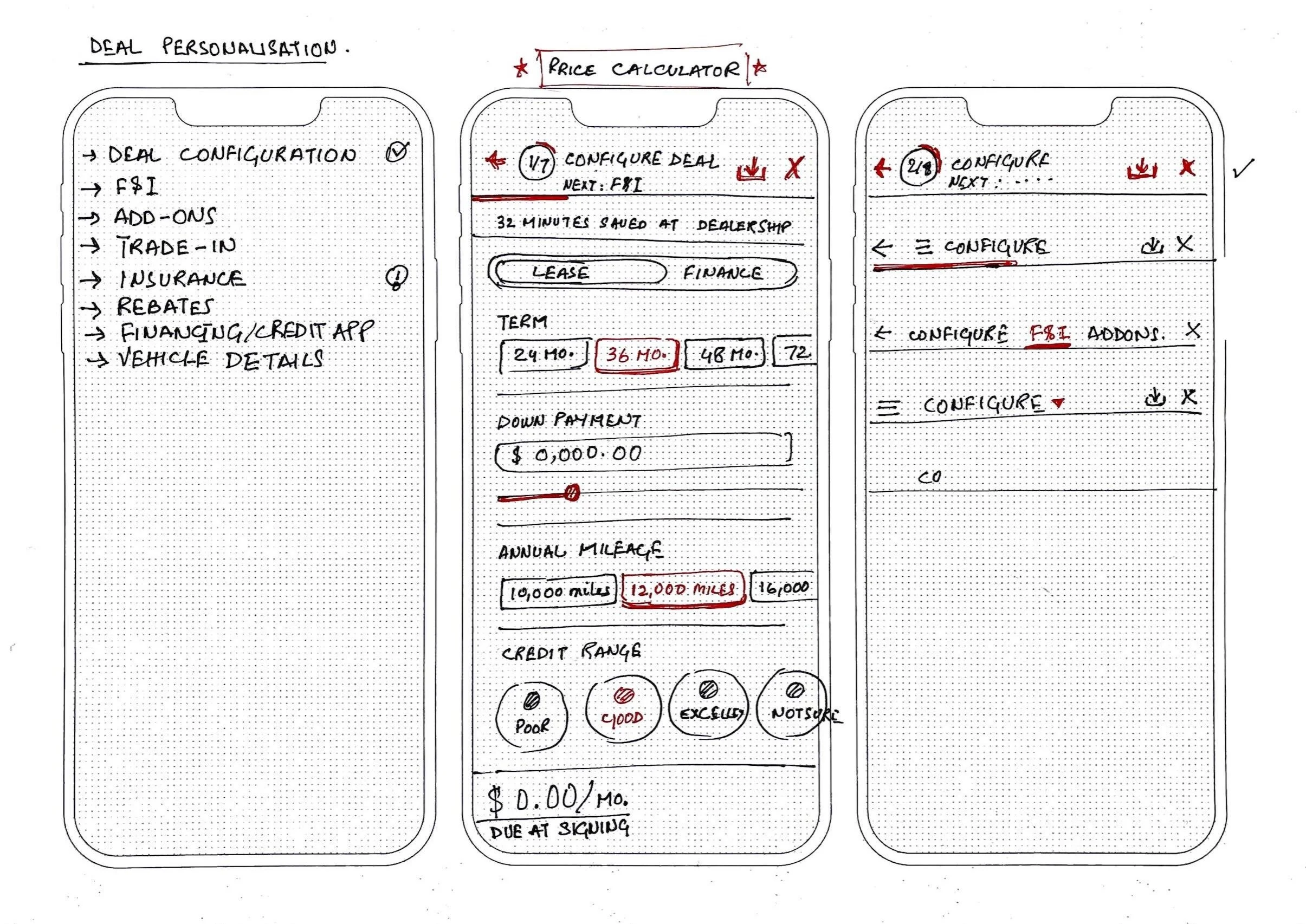
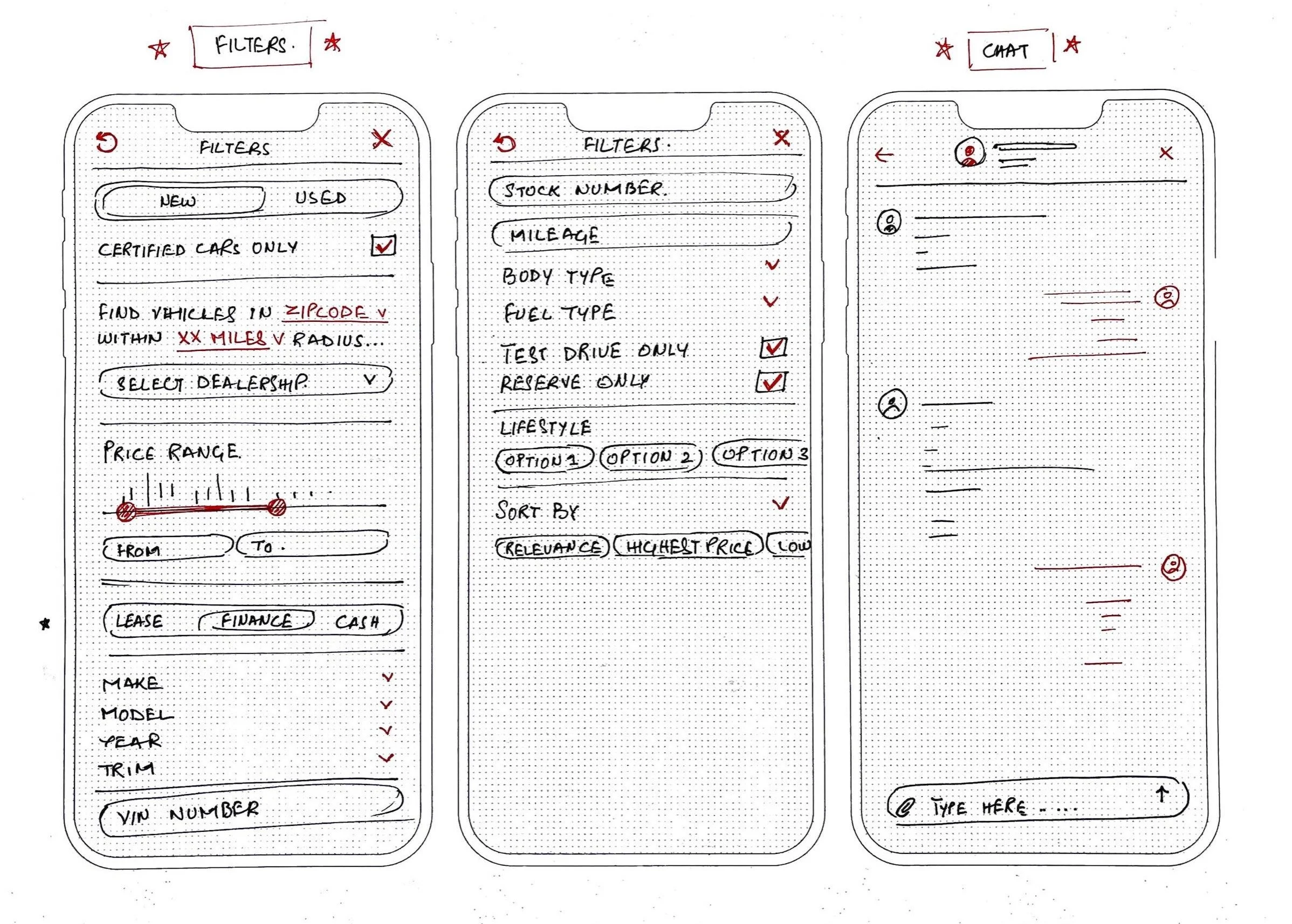
Rather than retrofitting existing dealership workflows, we started from first principles, mapping the entire car-buying journey end to end and identifying where uncertainty and drop-off occurred.
Early wireframes focused on simplifying decisions and reducing cognitive load to give users a clear sense of progress before visual polish or feature depth was introduced.
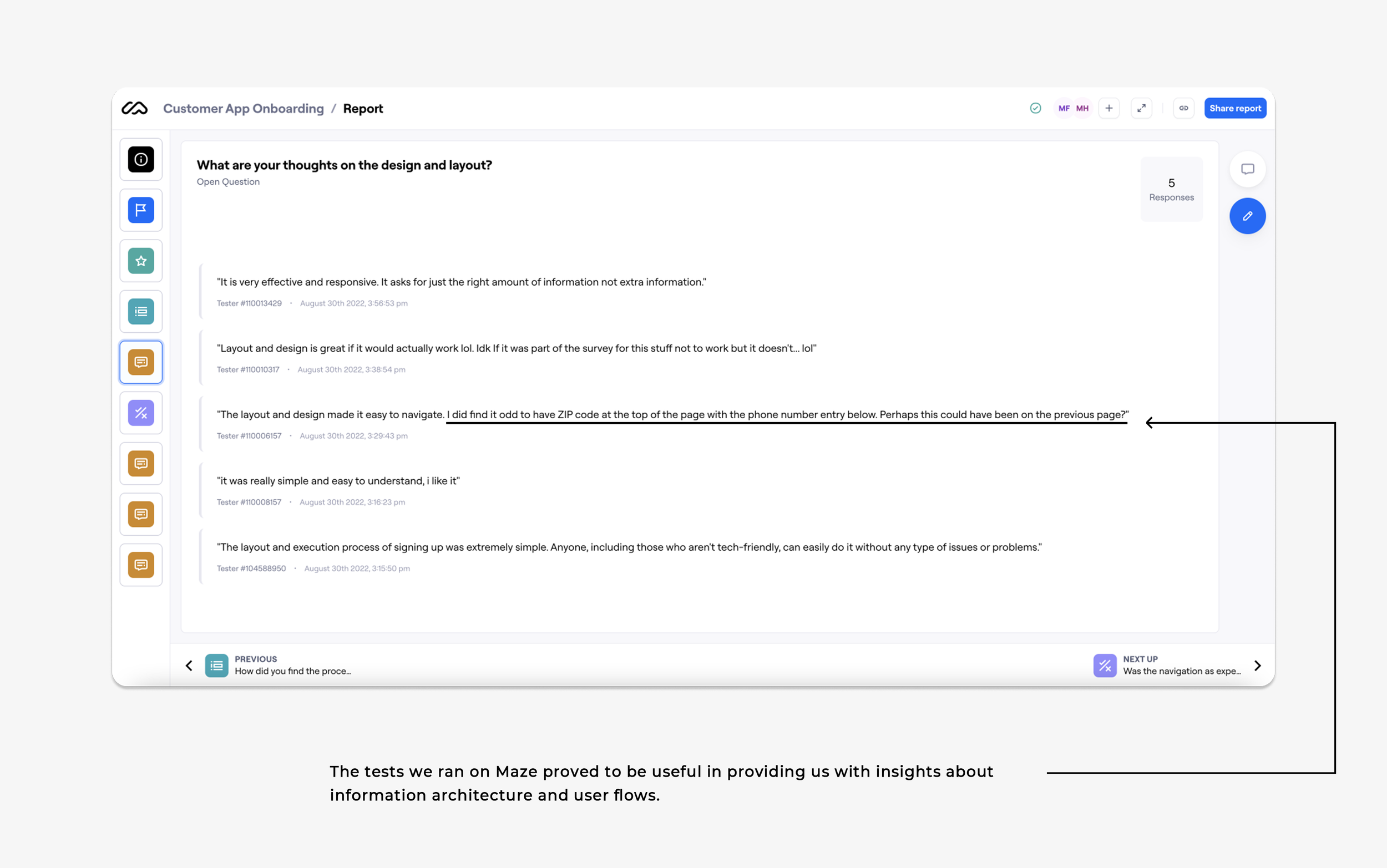
Creating a modern car-buying experience
Price Estimation
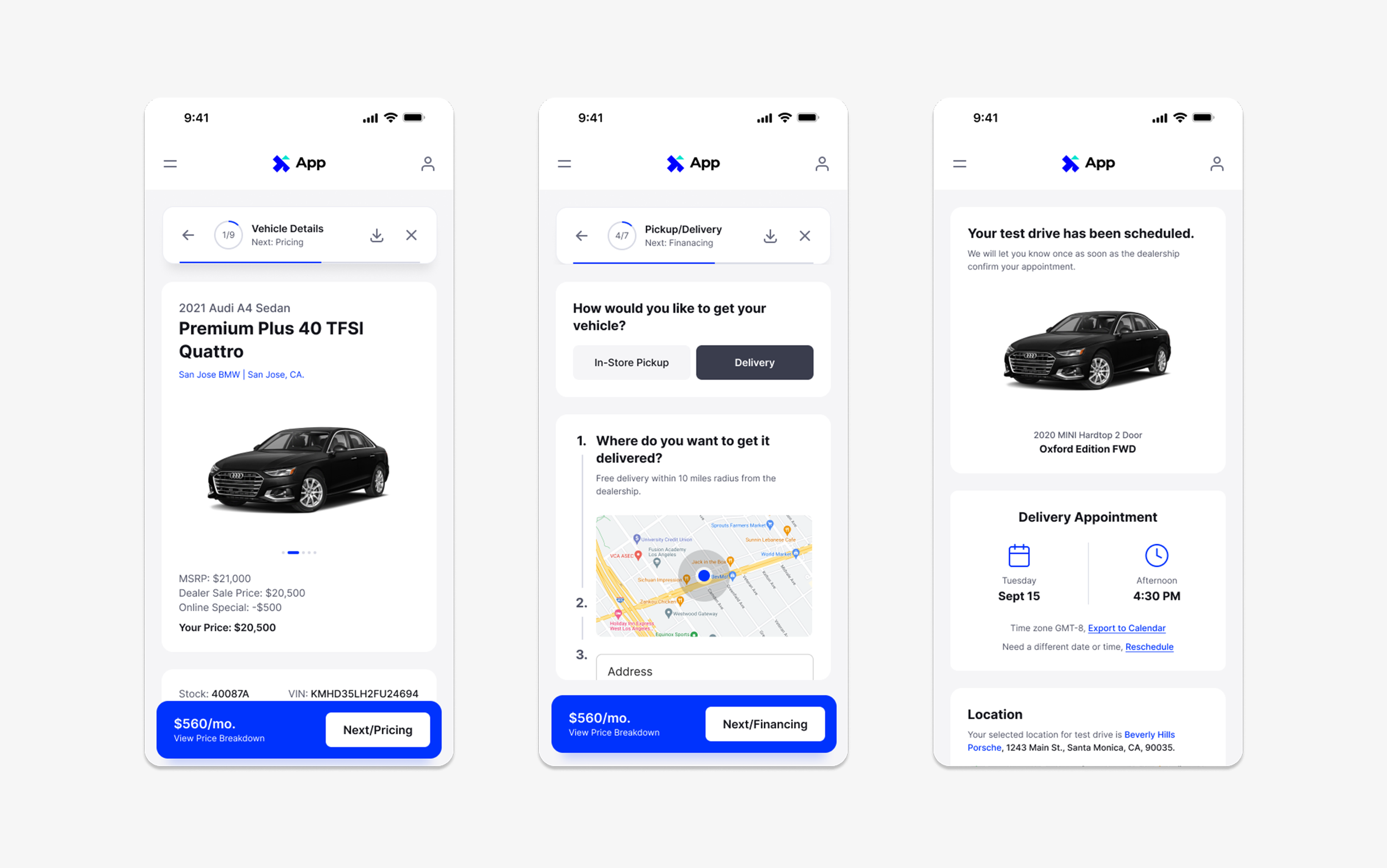
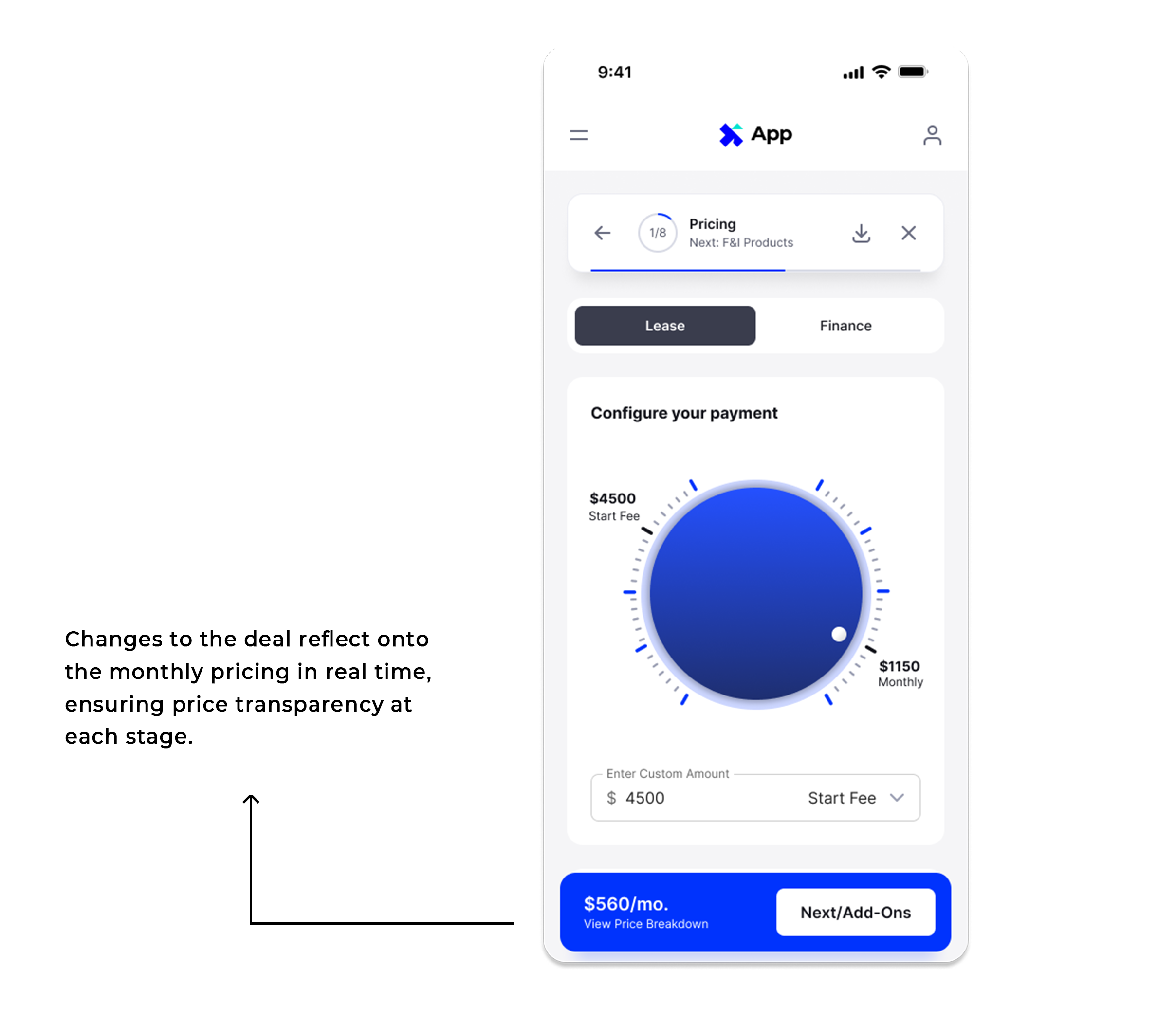
Pricing Transparency: Changes to the deal (down payment, mileage, add-ons etc.) reflect onto the monthly pricing shown in the footer in real time, will full price breakdown accessible at all times.
Trust: The app does not ask for any personal information before price is configured and calculated, and the user is onboarded once the entire deal is configured. This was a major pain point users had with other digital retailing tools.
User Onboarding
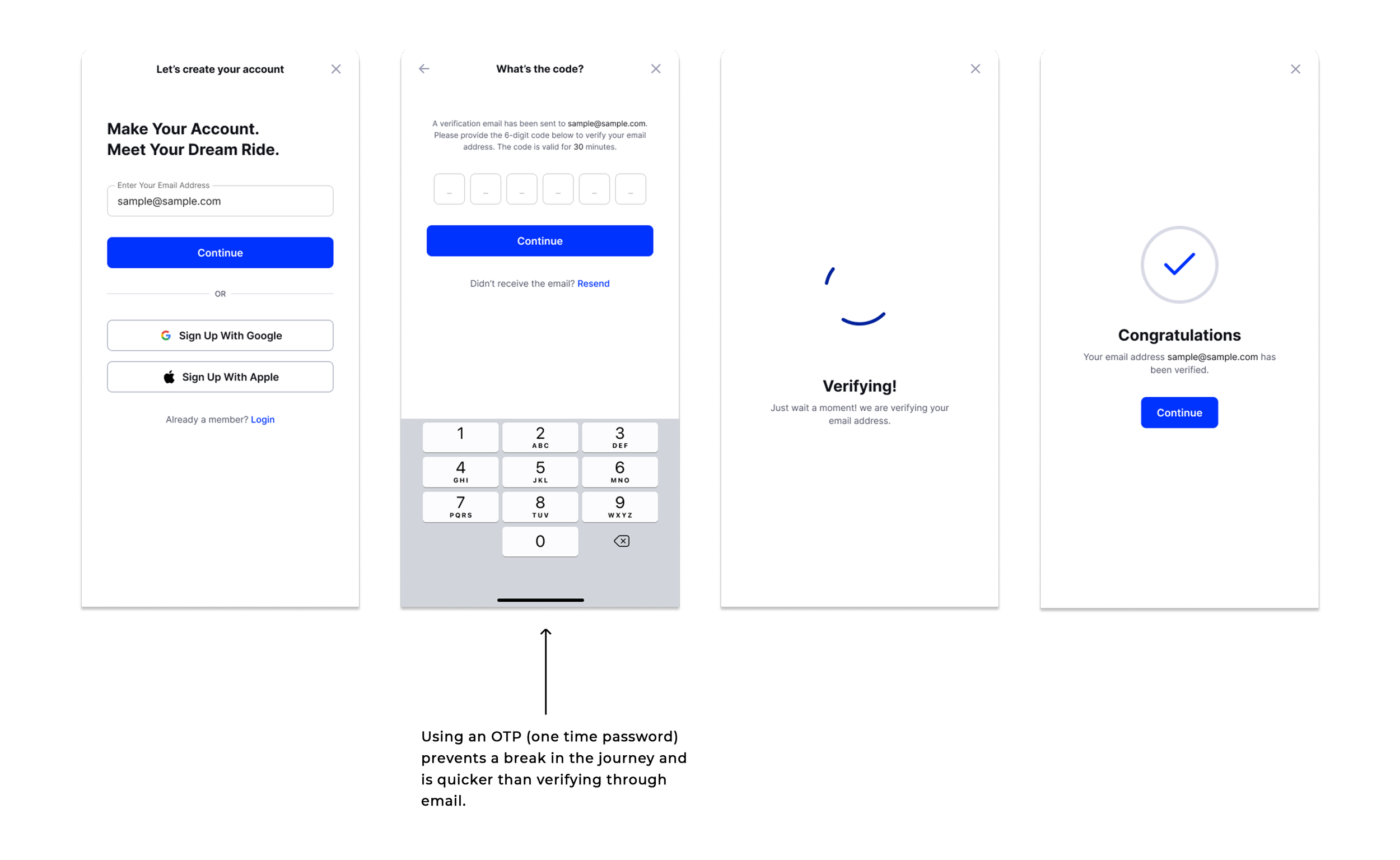
No disconnect: Email verifications are frustrating as they break the journey and create an experience disconnect for the user. Our onboarding process eliminates that.
Faster: Using an OTP (one time password) takes seconds to verify a user, where they can opt to use their phone number or email for OTP verification.
Deal Progress
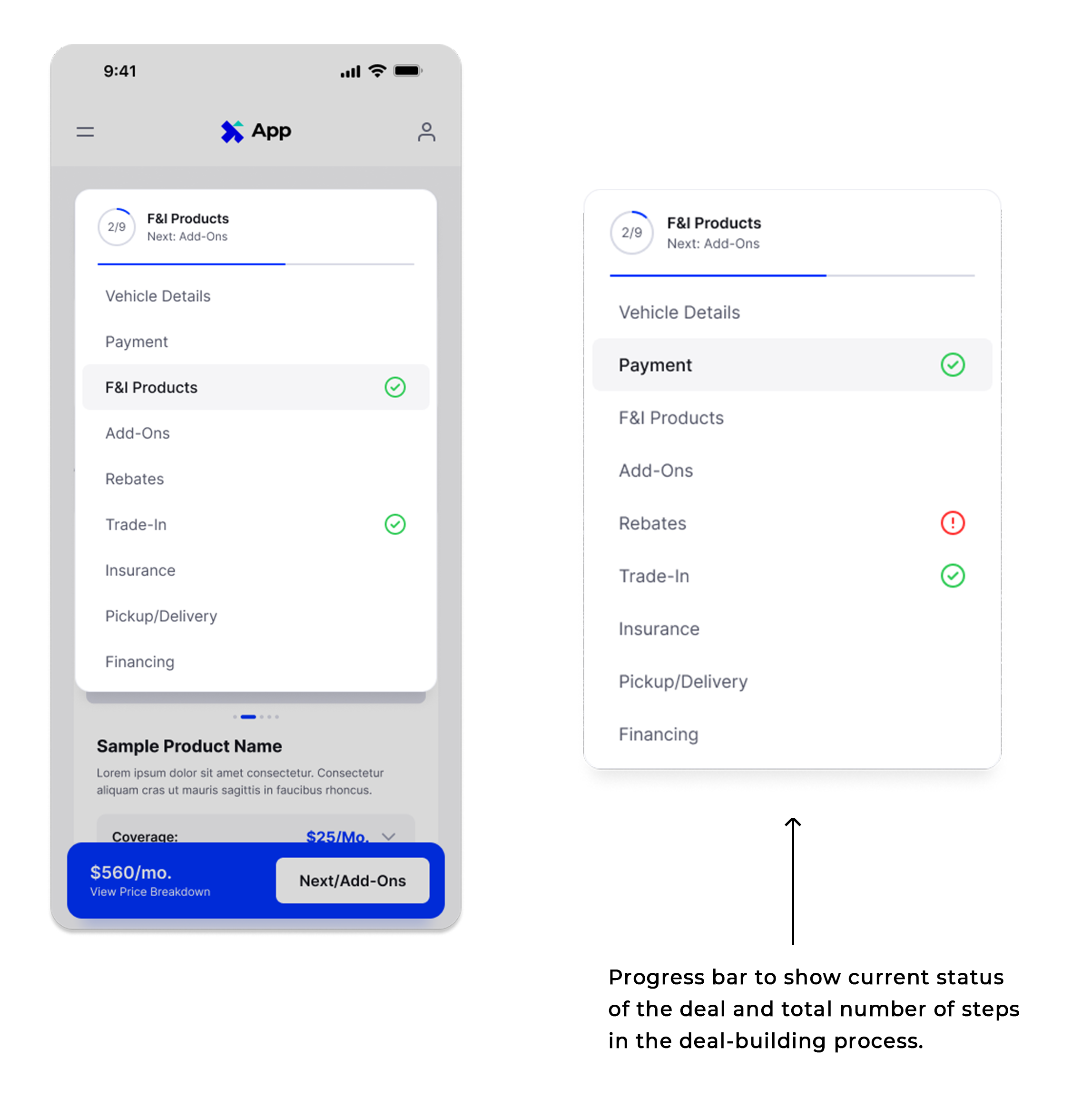
Clarity: At every stage of the deal building process the progress bar shows the status of each step (completed) and the total number of steps remaining. Car-buyers often complain about the lack of clarity in the process and our app gives them more control.
Nonlinearity: Buyers can move between the steps and complete them in the order they see fit - something that no other retailing tool offers.
Test Drive
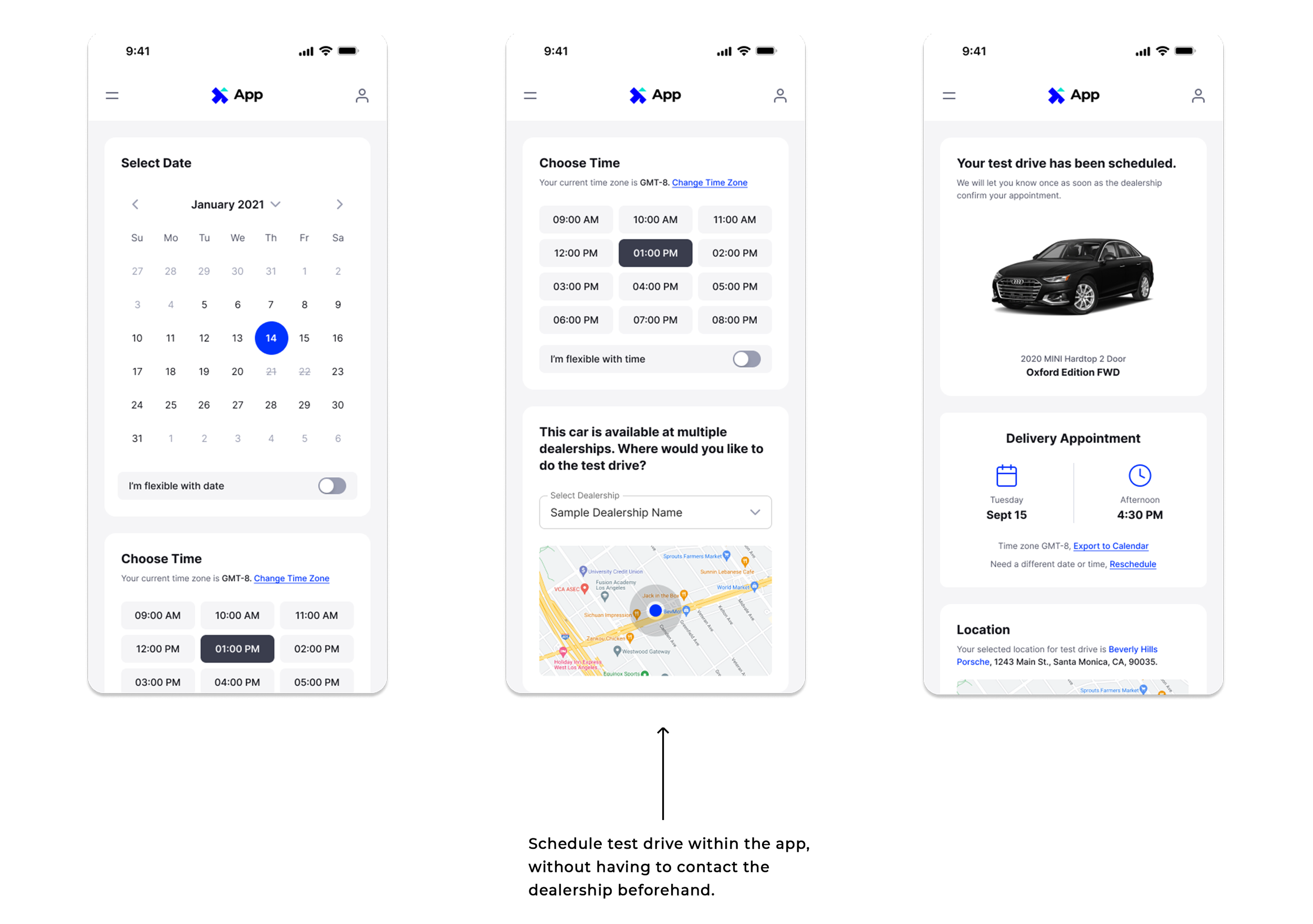
Convenience: Our research showed that test drives are a crucial part of the car-buying process, with 70-80% of buyers testing their drives before purchasing. However most retailing tools book test drive sessions offline, with most buyers having to set up appointments over the phone. Our app keeps test drive schedules for each available vehicle and lets the user schedule an appointment in-app.
Contracting
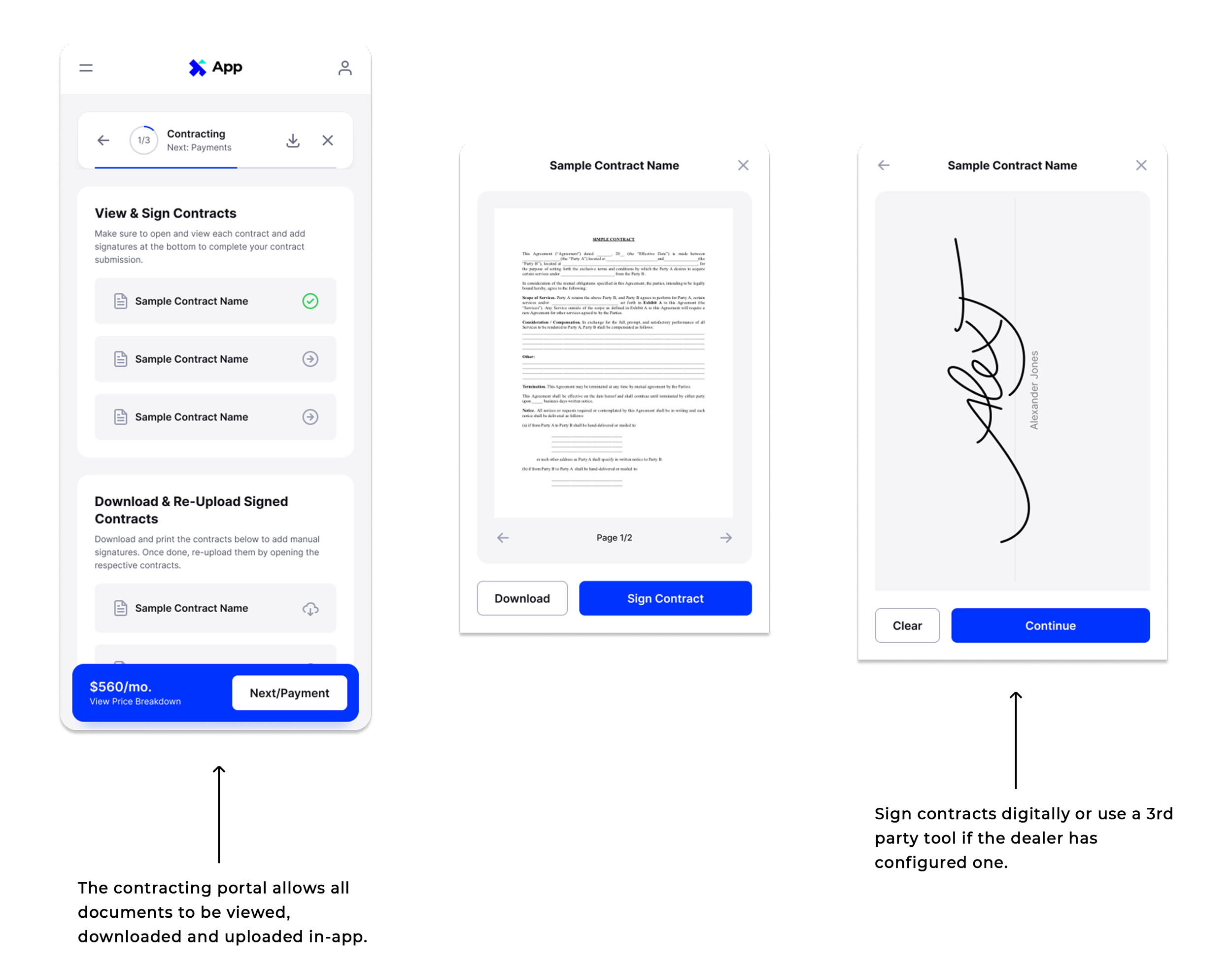
State-of-the-art contracting tool that lets buyers view, download and upload contracts and sign them digitally. Our platform allows for third-party integrations for popular e-Sign tools like DocuSign that dealers can configure at their end, and lets buyers sign digitally in-app as well.
Confidence through personalization
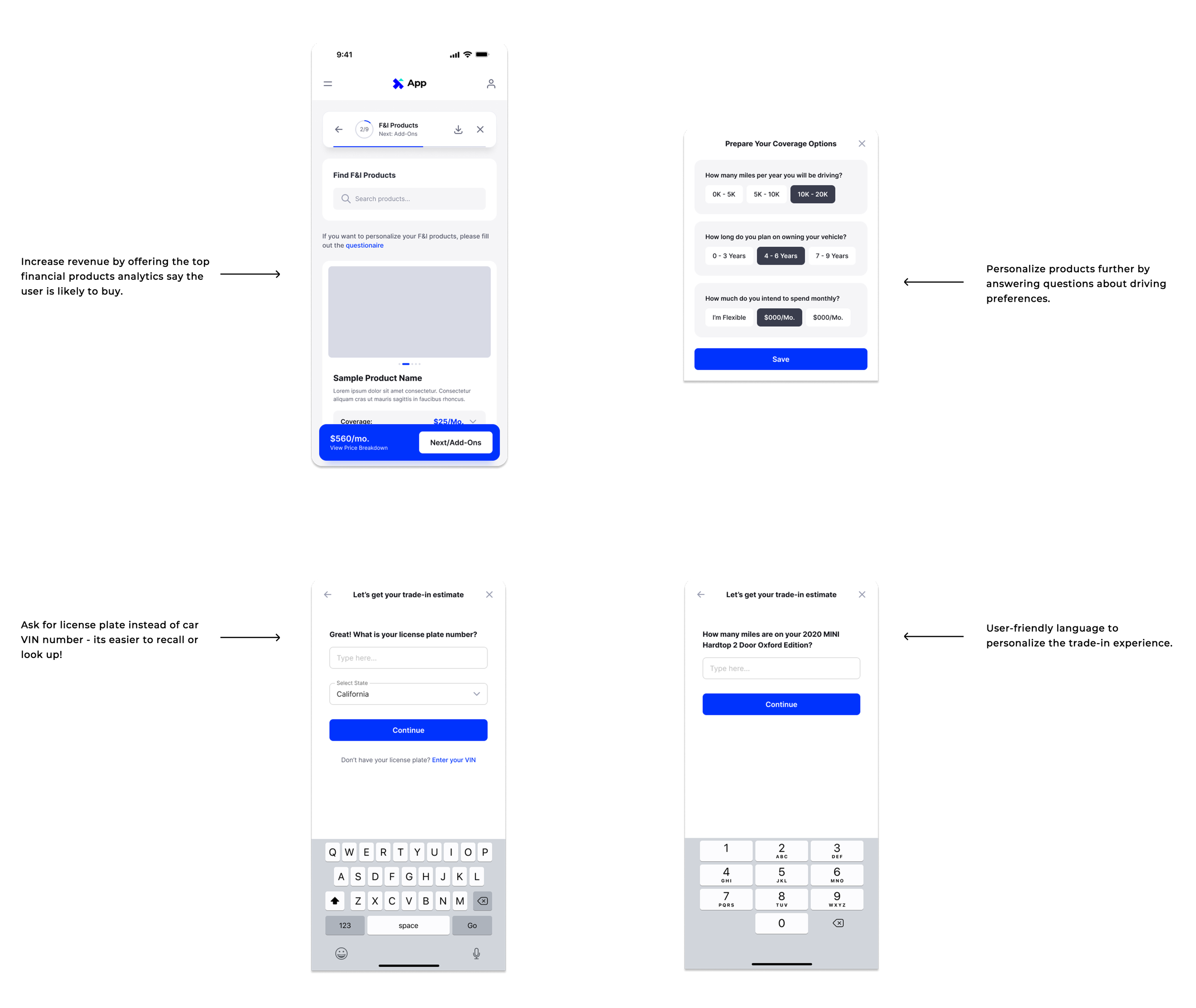
Buying a car involves high-stakes decisions, and confidence comes from feeling understood. Personalization in Drift was designed to reduce uncertainty by tailoring the experience to each user’s context, without forcing commitment too early.
Throughout the journey, analytics and optional inputs were used to surface the most relevant financing options, add-ons, and recommendations. Small language choices, such as asking “How many miles are on your vehicle?” instead of “Enter mileage”, helped make complex steps feel more human and trustworthy.
What Drift was able to accomplish
Drift was initially launched as a 90-day pilot across multiple dealership partners and was subsequently rolled into broader production use. Results below reflect a combination of pilot findings and post-pilot performance as dealerships transitioned from legacy digital retail flows to Drift’s digital experience. Performance is measured relative to existing dealership workflows and prior digital buying tools in use at participating dealerships.
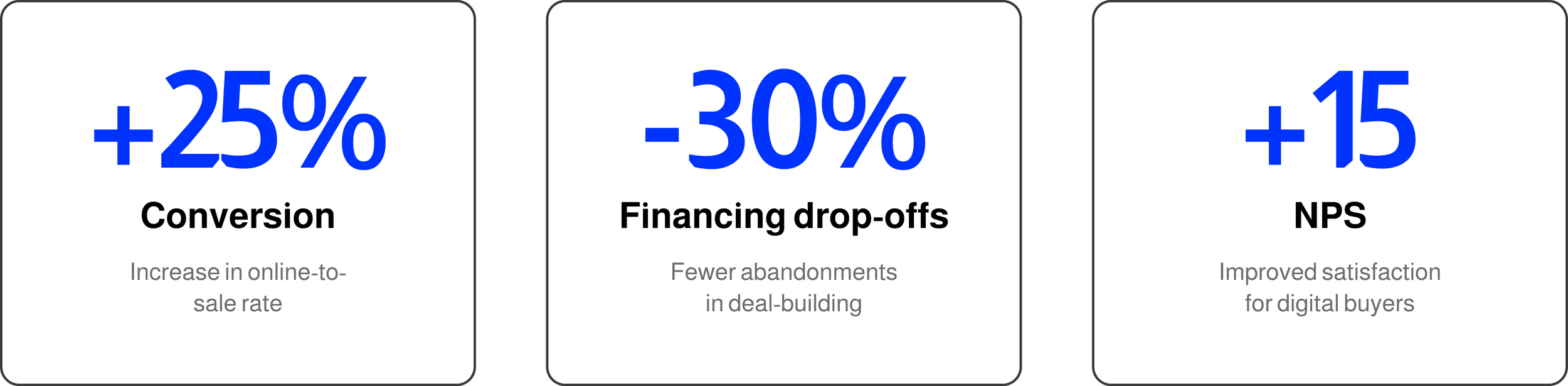
Online-to-sale conversion: ~25% increase compared to existing digital buying flows, driven by reduced friction and clearer deal configuration.
F&I revenue per unit: ~54% increase (e.g., ~$1,287 → ~$1,983), supported by better product surfacing and contextual recommendations.
Financing drop-off: ~30% reduction in abandonment during financing through soft pre-qualification and clearer financing options.
Trade-in ROI: Shift from net negative to positive returns (example reported swing from –$143 → +$217 per deal) due to improved data capture and valuation confidence.
Customer satisfaction: +15-point uplift in NPS among digital buyers compared to baseline dealership digital experiences.